Mastering Email Marketing: A Step-by-Step Guide for Retail S
Introduction
In the rapidly evolving landscape of online retail, email marketing continues to stand out as one of the most powerful and cost-effective digital channels. With an anticipated revenue growth of 287% worldwide from 2024 to 2032, it underscores its vital role in driving sales and customer engagement for retail businesses. This remarkable growth reflects the increasing reliance on personalized, targeted communication that fosters loyalty and boosts conversions.
What makes email marketing uniquely effective is its high return on investment (ROI), with some studies highlighting an impressive $36 earned for every dollar spent. Unlike social media or search engine optimization, email provides a direct, owned channel to reach customers—allowing brands to deliver tailored messages, promote specific products, and build long-term relationships. Its measurability enables marketers to analyze performance meticulously, refining campaigns for even better results.
Leading competitors emphasize the strategic advantages of email marketing, highlighting its ability to inform audiences about new products, special offers, and personalized content that resonates with individual preferences. Platforms like Catalogz further enhance these efforts by streamlining product catalog management, ensuring that marketing messages are backed by accurate and up-to-date product data. This seamless integration simplifies campaign execution and maximizes impact.
Whether you're an online retailer seeking to boost sales, a digital agency aiming to optimize client campaigns, or a product manufacturer striving for better catalog synchronization, mastering email marketing is essential. This guide will walk you through the steps to leverage this formidable channel effectively, helping you turn email into a powerful driver of retail success.
Understanding the Basics of Email Marketing
In the rapidly changing landscape of digital marketing, email marketing has established itself as a fundamental channel for engaging customers and driving sales. This section explores what email marketing entails, its historical development, and why it remains a critical tool for retail success. By understanding these basics, retailers can better leverage email to foster loyalty and boost revenue.
What is Email Marketing?
Email marketing is a form of digital marketing that involves sending targeted messages to potential and existing customers through email. It encompasses a wide range of activities, from promotional campaigns and newsletters to personalized product recommendations and transactional messages. Its core purpose is to nurture customer relationships, promote products or services, and ultimately drive conversions. Modern email marketing relies heavily on sophisticated tools that enable segmentation, automation, and performance tracking, making it a highly flexible and measurable channel.
History and Evolution of Email Marketing
Originally, email marketing started as simple mass email blasts, often resembling spam, with minimal targeting or personalization. Over time, advances in technology transformed it into a sophisticated marketing tool. The introduction of email automation platforms allowed marketers to send timely, relevant messages based on customer behavior and preferences. Today, email marketing has evolved into a personalized and data-driven discipline, utilizing segmentation and dynamic content to deliver highly relevant messages. This evolution has significantly increased its effectiveness, with some campaigns reporting revenue increases of up to 760% through segmentation and personalization.
An infographic illustrating this progression might show the shift from basic email blasts to automated, personalized campaigns, highlighting key milestones such as the adoption of automation tools, integration with customer data platforms, and advanced analytics capabilities.
Why Email Marketing is Essential for Retail
For retail businesses, email marketing offers unparalleled opportunities to build loyalty, promote products, and increase sales. It enables brands to communicate directly with their audience, delivering tailored content that resonates with individual preferences. The ability to segment audiences and automate campaigns means retailers can target the right customers at the right time with personalized offers, product recommendations, and relevant updates. Additionally, email marketing provides measurable results through detailed analytics, allowing marketers to refine their strategies continuously. This combination of personalization, automation, and data insights makes email marketing an indispensable component of any retail digital strategy.
Building an Effective Email List for Retail Success
Developing a robust and targeted email list is fundamental to maximizing the potential of your email marketing efforts. This section provides a step-by-step guide to growing your subscriber base, optimizing opt-in strategies, and ensuring compliance with data privacy standards. A well-curated list enables retail brands to deliver personalized, timely content that fosters customer loyalty and drives conversions.
Strategies for Growing Your Email List
Effective list building begins with implementing diverse strategies that attract and retain engaged subscribers. Retailers can leverage website pop-ups offering exclusive discounts or content, embed sign-up forms on high-traffic pages, and utilize social media campaigns to encourage followers to subscribe. Additionally, collecting emails at checkout or through loyalty programs helps capture interested customers at critical moments in their shopping journey. Partnering with complementary brands for co-marketing campaigns and hosting webinars or events can also expand your reach. The key is to provide value upfront, making subscribing an attractive proposition for potential customers.
Consistent content promotion and incentivization—such as offering first-time subscriber discounts or access to exclusive sales—are proven tactics to accelerate list growth. Remember, the quality of your subscribers is more important than quantity; engaged audiences are more likely to convert and remain loyal over time.
Best Practices for Opt-In Forms
Designing compelling opt-in forms is crucial to capturing genuine interest and building a healthy email list. Forms should be simple, visually appealing, and clearly communicate the benefits of subscribing. Use concise copy that emphasizes value, such as "Get exclusive offers and the latest product updates." Position opt-in forms prominently on your website—ideally in header banners, footer sections, and within blog posts or product pages—to maximize visibility. Incorporate clear calls-to-action (CTAs) and ensure the forms are mobile-optimized, as a significant portion of retail traffic occurs on smartphones.
Additionally, offering multiple subscription options—such as preferences for product categories or frequency of emails—helps segment your audience from the outset, enhancing personalization and engagement. Always include a privacy statement to reassure subscribers that their data will be protected and not shared without consent.
- Keep forms short and simple to reduce friction.
- Use compelling CTA buttons like "Join Now" or "Get Started."
- Test different placements and designs to optimize conversion rates.
Compliance and Data Privacy Considerations
Maintaining compliance with data privacy laws is essential to protect your brand and build trust with your audience. Regulations such as the General Data Protection Regulation (GDPR) and the CAN-SPAM Act stipulate clear guidelines for collecting, storing, and using email addresses. Always obtain explicit consent from subscribers before sending marketing communications, and provide easy options to unsubscribe at any time. Incorporate clear privacy policies that outline how customer data is handled, and ensure that your opt-in process is transparent and straightforward.
Implementing double opt-in procedures—where subscribers confirm their subscription via email—can improve list quality and reduce spam complaints. Regularly review and update your data management practices to stay aligned with evolving legal requirements, safeguarding both your reputation and your customers’ privacy rights.
Designing and Automating Retail Email Campaigns
Effective design and automation are critical to the success of retail email marketing campaigns. This section explores how to craft engaging content, leverage personalization and segmentation, and implement automation workflows that drive customer engagement and conversions. Utilizing performance metrics and continuous testing ensures campaigns remain optimized and impactful.
Creating Engaging Email Content
The foundation of a successful retail email campaign lies in compelling content that captures attention and encourages action. Engaging emails should feature clear, concise messaging complemented by visually appealing design elements such as high-quality images, branded colors, and easy-to-read typography. Personalization plays a vital role; tailoring content to individual preferences and shopping behaviors increases relevance and fosters loyalty. Incorporate strong call-to-actions (CTAs) that guide recipients toward desired actions, whether it's exploring a new collection, redeeming a discount, or making a purchase. Ensuring mobile responsiveness is essential, as a significant portion of retail emails are opened on smartphones, necessitating layouts that adapt seamlessly across devices.
Personalization and Segmentation Strategies
Personalization and segmentation are cornerstones of effective retail email marketing. By analyzing customer data—such as past purchase history, browsing behavior, and engagement levels—marketers can create targeted segments that reflect different customer personas. Personalized content, including product recommendations and tailored offers, resonates more deeply, increasing open and click-through rates. Segmentation enables sending relevant messages to specific groups, such as new subscribers, loyal customers, or cart abandoners, thus enhancing the overall user experience. Advanced tools like Catalogz facilitate real-time data synchronization, ensuring that product information remains accurate and personalized content is dynamically generated for each recipient.
| Segmentation Criteria | Example Strategies | Benefits |
|---|---|---|
| Purchase History | Recommend related products based on previous buys | Increases cross-sell and upsell opportunities |
| Engagement Level | Target highly engaged users with exclusive offers | Boosts loyalty and retention |
| Customer Lifecycle Stage | Send onboarding emails to new customers | Enhances initial engagement and brand familiarity |
Automation Workflows for Retail Campaigns
Automation workflows streamline repetitive tasks and enable timely, personalized interactions with customers. Setting up automated sequences—such as welcome series, cart abandonment reminders, post-purchase follow-ups, and re-engagement campaigns—ensures consistent communication without manual effort. These workflows are driven by triggers based on customer actions or time intervals, allowing brands to deliver the right message at the right moment. For instance, a cart abandonment email can be automatically sent within a few hours of a missed purchase, often leading to recovered sales.
To optimize automation, marketers should continuously monitor key metrics such as open rates, click-through rates (CTR), and conversions. Regular A/B testing of subject lines, send times, and content variations provides insights into what resonates best with audiences. For example, testing different subject lines can reveal which messaging prompts higher open rates, while experimenting with send times can identify when customers are most receptive. Leveraging analytics tools enables data-driven decision making, allowing marketers to refine workflows for maximum performance.
Ultimately, ongoing optimization through performance measurement and testing not only improves campaign results but also demonstrates ROI to stakeholders, reinforcing the value of automated, targeted retail email marketing.
Optimizing Email Performance with Data and Testing
In today's retail landscape, leveraging data and systematic testing is essential to maximize the effectiveness of email marketing campaigns. Integrating advanced AI-driven platforms like Catalogz not only automates catalog updates but also enhances data accuracy and personalization, leading to improved engagement and sales. This section explores how data-driven strategies, combined with continuous testing, can refine your email marketing efforts for optimal results.
Key Metrics to Track
Monitoring the right performance indicators allows retailers to assess the success of their email campaigns and identify areas for improvement. Critical metrics include open rates, click-through rates (CTR), conversion rates, bounce rates, and unsubscribe rates. Open rate reflects the effectiveness of subject lines and sender reputation, while CTR indicates how compelling your content and calls-to-action are. Conversion rate measures the ultimate goal—whether a purchase or other desired action—providing insight into ROI. Bounce rates and unsubscribes reveal deliverability and list health, prompting necessary adjustments. Utilizing tools like Catalogz ensures product data remains accurate, which directly influences click-through and conversion metrics by showcasing relevant, up-to-date products.
A/B Testing Techniques
A/B testing, or split testing, involves comparing two versions of an email element to determine which performs better. Common test variables include subject lines, email copy, images, call-to-action buttons, send times, and personalization tactics. For instance, testing different subject lines can reveal which phrasing garners higher open rates, while experimenting with send times uncovers when your audience is most receptive. Incorporating AI capabilities from platforms like Catalogz allows dynamic content adjustments based on customer preferences, further enhancing personalization. Consistent testing and iteration enable marketers to fine-tune their campaigns, ensuring continuous performance improvement.
Leveraging Analytics for Continuous Improvement
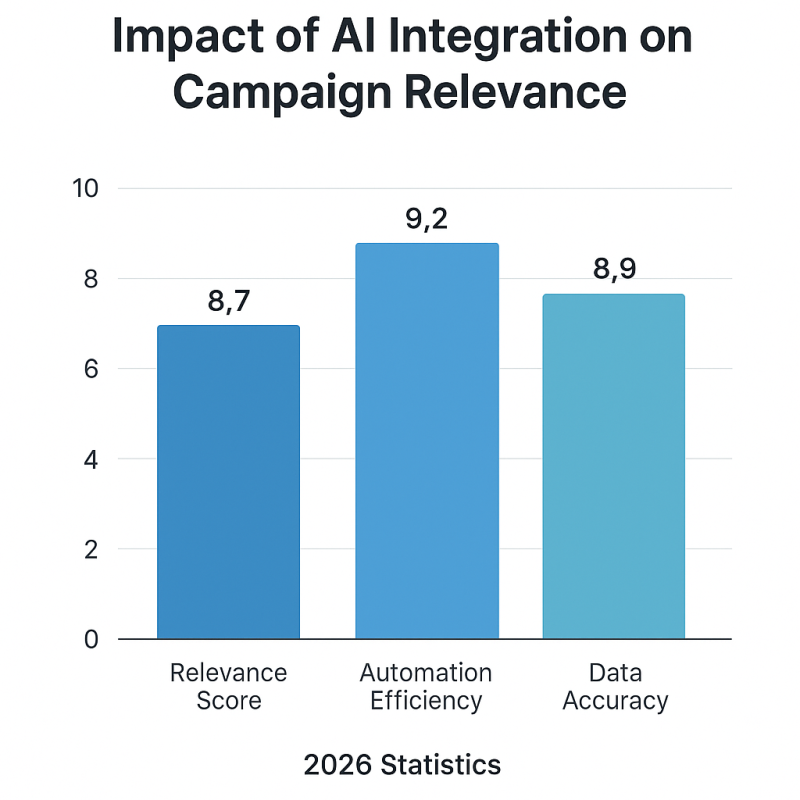
Advanced analytics provide deep insights into customer behavior and campaign performance, empowering marketers to make data-driven decisions. Visual dashboards and detailed reports highlight trends, such as peak engagement times, most effective content types, and high-performing segments. For example, a chart illustrating the impact of AI integration on campaign relevance reveals that automation efficiency scores reach as high as 9.2 out of 10, while data accuracy scores are nearly 9, underscoring the benefits of intelligent catalog management. These insights help refine targeting strategies, optimize content, and improve personalization. By continuously analyzing performance metrics, retailers can identify new opportunities, test innovative approaches, and adapt their email marketing tactics to changing customer preferences, ultimately boosting engagement and sales.
| Key Metrics | Description | Importance |
|---|---|---|
| Open Rate | Percentage of recipients who open the email | Measures subject line effectiveness and sender reputation |
| Click-Through Rate (CTR) | Percentage of recipients who click on links within the email | Indicates engagement and content relevance |
| Conversion Rate | Percentage of recipients completing desired actions (e.g., purchase) | Assesses campaign ROI and sales impact |
| Bounce Rate | Percentage of emails that could not be delivered | Reflects list quality and deliverability issues |
| Unsubscribe Rate | Percentage of recipients opting out of future emails | Indicates content relevance and subscriber satisfaction |
Incorporating AI-powered tools like Catalogz enhances these metrics by ensuring that product data is accurate and up-to-date, which is crucial for maintaining relevance and customer trust. The integration of such platforms automates catalog updates, reduces manual errors, and personalizes product recommendations within emails, ultimately driving higher engagement and conversions.
Data Insights Chart
The chart below illustrates the impact of AI integration on various aspects of email campaign performance. The relevance score, automation efficiency, and data accuracy demonstrate significant improvements, with scores of 8.7, 9.2, and 8.9 out of 10 respectively. These insights highlight how leveraging AI and advanced catalog management tools like Catalogz can transform your email marketing strategy into a more effective, data-driven process.
Integrating AI and Catalog Management for Retail Emails
In today's competitive retail landscape, the integration of artificial intelligence (AI) with catalog management systems plays a pivotal role in enhancing email marketing effectiveness. This section provides a comparative overview of how AI-driven solutions, like Catalogz, support retail email campaigns by improving personalization, data accuracy, and automation. We will explore the benefits, support mechanisms, and real-world case examples that illustrate successful integration strategies.
Benefits of AI-Driven Catalog Automation
Implementing AI-powered catalog automation offers numerous advantages that directly influence the success of retail email marketing. First and foremost, AI enhances data accuracy by continuously updating product information, ensuring customers receive the most current and relevant product recommendations. This real-time synchronization reduces manual errors and saves time, allowing marketers to focus on strategic campaign elements. Additionally, AI facilitates hyper-personalization by analyzing customer behavior and preferences, enabling dynamic content generation tailored to individual recipients. This leads to increased engagement, higher click-through rates, and improved conversion rates.
- Pros: Increased data accuracy, personalized content, reduced manual effort, scalable automation.
- Cons: Initial setup complexity, dependency on quality data, potential over-reliance on automation without human oversight.
How Catalogz Supports Email Campaigns
Catalogz exemplifies an AI-driven platform designed to streamline product catalog management and seamlessly integrate with email marketing systems. Its core functionalities include intelligent product data organization, automated updates, and real-time synchronization across channels. By maintaining an accurate and organized product database, Catalogz ensures that email campaigns feature relevant, up-to-date offerings, which significantly enhances personalization efforts. Its automation features enable marketers to trigger targeted emails based on customer actions, such as cart abandonment or post-purchase follow-ups, with product recommendations that reflect current inventory and pricing.
| Support Aspect | Features | Impact on Email Marketing |
|---|---|---|
| Data Accuracy | Automated product updates, error reduction | Ensures relevant product displays, boosts customer trust |
| Personalization | Dynamic content generation based on customer data | Increases engagement and conversions |
| Automation | Trigger-based campaigns, real-time synchronization | Enhances timely relevance, reduces manual workload |
Case Examples of Successful Integration
Several retail brands have successfully harnessed AI-powered catalog management platforms like Catalogz to elevate their email marketing strategies. For example, a fashion retailer integrated Catalogz to automate daily product updates and personalized recommendations. As a result, they observed a 25% increase in email open rates and a 15% uplift in sales attributed directly to targeted campaigns. Another case involved a home goods retailer using Catalogz’s dynamic product feeds to power cart abandonment emails, leading to a 20% recovery rate on abandoned carts and a notable improvement in customer engagement.
These success stories highlight the importance of aligning catalog management with email marketing automation. By leveraging AI, retailers can deliver highly relevant, timely, and personalized content that resonates with customers, ultimately driving loyalty and revenue. The key to success lies in adopting best practices—such as crafting compelling subject lines, respecting customer preferences, and maintaining list hygiene—while avoiding pitfalls like overloading emails with promotional content or neglecting mobile optimization. Proper integration and strategic use of AI tools like Catalogz empower retail brands to maximize their email marketing ROI and foster stronger customer relationships.
Best Practices and Common Pitfalls in Retail Email Marketing
Achieving success in retail email marketing requires a strategic approach that combines effective tactics with awareness of common mistakes. This section outlines essential best practices through a checklist, helping retailers optimize their campaigns while avoiding pitfalls. Leveraging tools like Catalogz can further streamline efforts, ensuring your emails are relevant, personalized, and impactful. A holistic strategy integrating list building, content personalization, automation, and data analysis fosters stronger customer loyalty and drives sales growth.
Top Tips for Effective Retail Emails
- Build and Maintain a Quality List: Focus on growing an engaged subscriber base through targeted opt-in strategies and maintaining list hygiene.
- Personalize Content: Use customer data to tailor messages, product recommendations, and offers that resonate with individual preferences.
- Leverage Automation: Implement automated workflows such as welcome series, cart abandonment reminders, and post-purchase follow-ups for timely engagement.
- Analyze Data Regularly: Monitor key metrics like open rates, CTR, and conversions to identify what works and refine your strategies accordingly.
- Integrate Catalog Management Tools: Use platforms like Catalogz to ensure product data is accurate, up-to-date, and dynamically integrated into your campaigns.
- Segment Your Audience: Divide your list based on behaviors, preferences, and lifecycle stages to deliver more relevant content.
- Design Mobile-Responsive Emails: Ensure your emails look great and function well across all devices, especially smartphones.
Avoiding Common Mistakes
- Overloading with Promotions: Excessive promotional content can lead to subscriber fatigue; balance sales messages with valuable content.
- Ignoring Personalization: Sending generic emails reduces engagement; leverage customer data to personalize your messaging.
- Neglecting Mobile Optimization: Failing to optimize for mobile devices can significantly decrease engagement rates.
- Sending Irrelevant or Untargeted Messages: Poor segmentation leads to low open rates and higher unsubscribes; segment your audience effectively.
- Not Testing or Analyzing Campaigns: Without A/B testing and data review, campaigns may underperform; always test and analyze results.
- Ignoring Data Privacy Regulations: Non-compliance with GDPR or CAN-SPAM can damage reputation and lead to legal issues; ensure transparent opt-in processes.
Ensuring Mobile and Cross-Device Compatibility
- Use Responsive Design: Craft emails that automatically adapt to various screen sizes and devices for seamless viewing.
- Optimize Images and Load Times: Compress images and minimize code to ensure quick loading on all devices.
- Test Across Devices: Regularly preview your emails on different smartphones, tablets, and desktops to identify and fix display issues.
- Clear and Visible Calls-to-Action: Make sure buttons and links are easy to tap and stand out visually on mobile screens.
- Keep Content Concise: Use clear, brief messaging that is easy to read on smaller screens, avoiding clutter and lengthy paragraphs.
Conclusion
Mastering email marketing is a vital component of successful retail strategies, offering a direct, personalized channel to engage customers and drive sales. This section summarizes key insights and practical tips to help you get started and optimize your campaigns effectively. Whether you're new to email marketing or looking to refine your approach, understanding foundational principles and best practices ensures sustained growth and customer loyalty.
Getting Started with Email Marketing
To begin, clearly define your target audience and establish specific goals for your campaigns, such as increasing sales, boosting engagement, or nurturing customer loyalty. Selecting the right email marketing platform is essential—look for solutions that support automation, segmentation, and integration with your product catalog, like Catalogz. Building an engaged subscriber list involves employing opt-in strategies, offering incentives, and ensuring compliance with privacy regulations. Segmentation allows you to tailor messages, making your content more relevant and compelling. Creating well-designed, tested emails that resonate with your audience is crucial for maximizing open and click-through rates.
Key Metrics and Best Practices
Tracking performance metrics such as open rates, click-through rates, and conversions provides valuable insights into your campaign effectiveness. Regular analysis helps identify what works and where improvements are needed. Competitors emphasize that a high-quality subscriber list—worth approximately $100 to $600 per 1,000 emails depending on segmentation and engagement—is a valuable asset. Focus on building a list of genuinely interested customers through targeted opt-in methods and delivering valuable content consistently.
The "Rule of 7"—the concept that a prospect needs to see your message at least seven times before taking action—remains relevant in email marketing. Repeated exposure through well-timed, relevant emails increases brand recall and conversion likelihood. Combining this principle with strategic segmentation and personalization enhances your chances of turning subscribers into loyal customers.
Final Tips for Success
- Define your audience carefully and tailor content to their needs and preferences.
- Choose a reliable platform that supports automation, segmentation, and integration with your catalog system.
- Build and maintain a high-quality, engaged subscriber list through transparent opt-in processes.
- Consistently test and analyze your emails to optimize performance.
- Incorporate best practices such as mobile responsiveness, clear CTAs, and relevant content delivery.
By following these guidelines and leveraging innovative tools like Catalogz, retail businesses can unlock the full potential of email marketing—creating meaningful customer relationships, increasing sales, and establishing a competitive edge in the digital marketplace.
Frequently Asked Questions (FAQ)
This section addresses common questions about email marketing in retail, providing clear and concise answers to help you navigate the strategies, tools, and best practices essential for success. Whether you are just starting out or looking to optimize your campaigns, these FAQs offer valuable insights to enhance your understanding and implementation.
What is the primary benefit of using email marketing for retail businesses?
The primary benefit of email marketing for retail is its ability to deliver personalized, targeted messages directly to customers, fostering loyalty, increasing engagement, and driving sales. It offers a high return on investment (ROI), with some campaigns earning $36 or more for every dollar spent, due to its effectiveness in nurturing customer relationships and promoting products efficiently.
How can I build and grow my retail email list effectively?
Effective list building involves offering incentives such as exclusive discounts or content, placing opt-in forms prominently on your website, and leveraging social media campaigns. Collecting emails during checkout or via loyalty programs also helps capture interested customers. Ensuring your opt-in process is transparent, simple, and compliant with privacy laws encourages genuine subscriptions and long-term engagement.
What are best practices for designing retail email campaigns?
Best practices include creating mobile-responsive designs, using high-quality visuals, and crafting engaging, personalized content with clear calls-to-action (CTAs). Segmenting your audience based on behavior or preferences allows for targeted messaging, increasing relevance and effectiveness. Regular testing of subject lines, send times, and content helps optimize campaign performance.
How does AI integration improve retail email marketing?
AI integration enhances email marketing by ensuring real-time, accurate product data updates, enabling hyper-personalization, and automating targeted campaigns. Platforms like Catalogz support dynamic content generation, improve data accuracy, and facilitate automation workflows such as cart abandonment reminders or personalized recommendations, leading to higher engagement and conversions.
What legal considerations should I be aware of when sending marketing emails?
Compliance with data privacy laws such as GDPR and the CAN-SPAM Act is essential. This includes obtaining explicit consent before sending marketing emails, providing easy unsubscribe options, and maintaining transparent privacy policies. Using double opt-in processes and regularly reviewing your data management practices helps protect your brand and build trust with subscribers.
How can I measure the success of my email marketing campaigns?
Key metrics include open rates, click-through rates (CTR), conversion rates, bounce rates, and unsubscribe rates. Tracking these indicators provides insights into your campaign’s effectiveness. Advanced analytics and A/B testing allow you to refine your strategies, improve personalization, and optimize content for better results over time.
What role does catalog management play in email marketing?
Catalog management ensures that product information is accurate, up-to-date, and organized, which is vital for relevant and compelling email content. Integrating AI-driven platforms like Catalogz streamlines this process by automating updates, reducing errors, and enabling dynamic product recommendations that resonate with customers, ultimately boosting engagement and sales.
Can email marketing work for all types of retail businesses?
Yes, email marketing can be effective across various retail sectors—from fashion and electronics to home goods and groceries. The key is tailoring content, offers, and automation strategies to your specific audience and product offerings. Customization and segmentation are crucial to making email campaigns relevant and impactful for different retail verticals.
What are common mistakes to avoid in retail email marketing?
Common pitfalls include overloading emails with promotional content, neglecting personalization, ignoring mobile optimization, and sending irrelevant messages due to poor segmentation. Additionally, failing to comply with privacy laws, not testing campaigns, and neglecting performance analysis can hinder success. Avoid these by maintaining a strategic focus on quality, relevance, and compliance to maximize your email marketing ROI.