The Ultimate Guide to Email Marketing Success
Introduction
Email marketing has become an indispensable component of modern digital strategies, especially for online retail and e-commerce businesses seeking to engage customers effectively. With a projected revenue growth of 287% from 2024 to 2032, this channel demonstrates immense potential for brands aiming to boost sales and brand loyalty. Its high return on investment (ROI), coupled with the ability to deliver personalized messages and measurable outcomes, makes email marketing a vital tool for staying competitive in a crowded marketplace.
As the digital landscape evolves, so do opportunities to optimize email campaigns through advanced tools and automation. Catalogz, an innovative AI-driven platform, exemplifies this shift by streamlining product catalog management, enabling businesses to deliver highly targeted and relevant content to their audiences. By leveraging intelligent automation and data organization, Catalogz helps online retailers enhance customer engagement, improve conversion rates, and maximize campaign efficiency. Embracing these modern solutions is essential for marketers who want to stay ahead in an increasingly data-driven environment, ensuring their email marketing efforts are not only effective but also scalable and sustainable. Strategies that integrate seo marketing alongside email campaigns can further amplify digital presence and customer reach.
What is Email Marketing and Why It Matters
Email marketing is a targeted digital communication strategy that involves sending emails to promote products, nurture leads, and foster long-term customer loyalty. It serves as a direct line of contact between businesses and their audience, allowing for personalized messaging, timely updates, and tailored offers that resonate with individual preferences. As an essential component of modern marketing, email marketing provides a reliable, controllable, and measurable channel to engage customers effectively.
Historically, email marketing has evolved from simple bulk emails to sophisticated campaigns powered by automation and data analytics. In the early days, marketers relied on basic email blasts, but today, advanced segmentation, dynamic content, and AI-driven personalization enable brands to deliver highly relevant messages at scale. This evolution has significantly increased its effectiveness, with many companies reporting a return on investment (ROI) that outperforms other digital channels. The ability to adapt content based on user behavior and preferences ensures that email remains a cornerstone of successful online retail strategies.
Key Benefits for Online Retailers
For online retail businesses, the advantages of email marketing are substantial and multifaceted. One of its primary benefits is its high ROI, with some studies indicating that for every dollar spent, email marketing yields an average return of 42 dollars. This impressive efficiency is complemented by the ownership of the audience—retailers retain full control over their subscriber lists, unlike social media followers who are subject to platform algorithms and changes. Personalization is another critical benefit; brands can craft tailored offers, recommendations, and content based on customer data, leading to increased engagement and conversions. Additionally, the measurable nature of email campaigns allows retailers to track open rates, click-throughs, and conversions precisely, enabling continuous optimization and strategic refinement.
Data Insights: Benefits of Email Marketing
| Benefit | Percentage |
|---|---|
| High ROI | 40% |
| Audience Ownership | 20% |
| Personalization | 25% |
| Measurable Results | 15% |
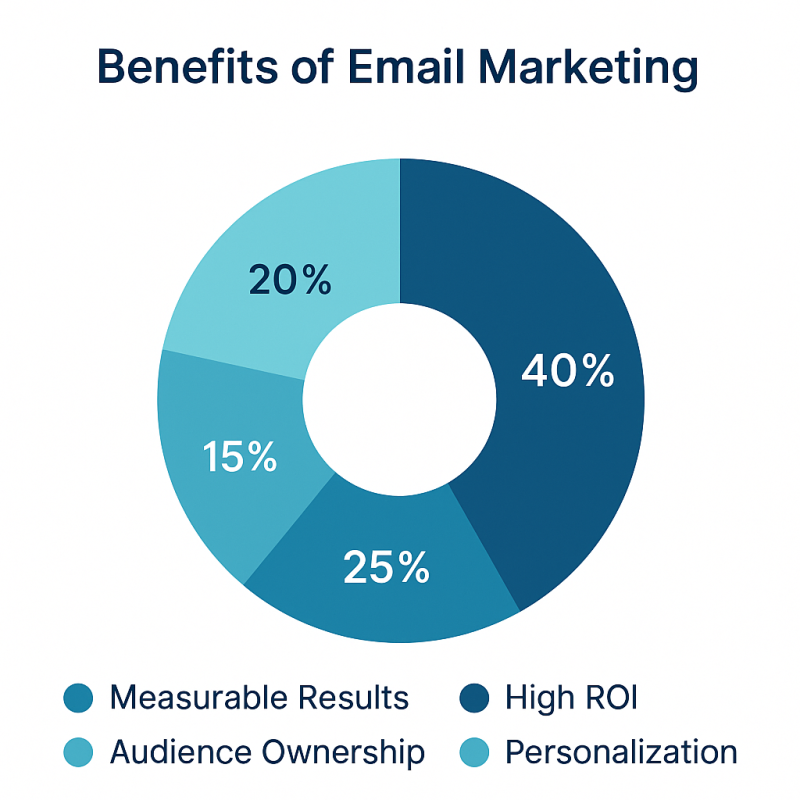
This pie chart illustrates the key benefits of email marketing, highlighting its high ROI as the most significant advantage, followed by personalization and audience ownership. These factors collectively make email an indispensable tool for online retail success, enabling brands to build stronger customer relationships, increase sales, and optimize marketing efforts through data-driven insights.
Types of Email Campaigns and Their Uses
Understanding the different types of email campaigns is essential for creating targeted, effective marketing strategies that resonate with your audience at every stage of their customer journey. Each campaign type serves specific goals, from welcoming new subscribers to re-engaging inactive customers, and requires tailored messaging and design approaches to maximize engagement and conversion rates. In this section, we compare the most common email campaign types, exploring their unique objectives and best practices for implementation.
Welcome and Onboarding Emails
Welcome and onboarding emails are the first interactions new subscribers have with your brand. Their primary purpose is to introduce your business, set expectations, and foster a positive initial experience. These emails typically contain a warm greeting, an overview of what subscribers can expect, and often include special offers or incentives to encourage immediate engagement. Effective onboarding emails should be personalized, visually appealing, and concise, guiding new customers toward their next action, such as exploring your product catalog or making their first purchase.
Promotional and Seasonal Campaigns
Promotional and seasonal campaigns are designed to drive sales, promote new product launches, or capitalize on holidays and special events. These emails focus on highlighting offers, discounts, and exclusive deals tailored to specific occasions or product categories. To maximize impact, these campaigns should feature compelling visuals, clear calls-to-action (CTAs), and a sense of urgency, such as limited-time offers. Timing is crucial; scheduling these emails around holidays, seasons, or shopping peaks ensures your message reaches customers when they are most receptive to purchasing.
Transactional and Reminder Emails
Transactional emails are triggered by specific customer actions, such as order confirmations, shipping updates, or password resets. They are highly personalized and serve to inform, reassure, and enhance the customer experience. Reminder emails, on the other hand, prompt customers to complete pending actions, like abandoned cart recovery or subscription renewals. These emails should be clear, concise, and include relevant information, with strategically placed CTAs encouraging customers to finalize their transactions or revisit their cart. Ensuring these messages align with the brand voice and provide value is key to maintaining trust and driving conversions.
Re-engagement and Feedback Requests
Re-engagement campaigns aim to revive inactive subscribers by reminding them of your brand’s value or offering incentives to re-engage. These emails often feature personalized content, special discounts, or surveys to better understand their preferences. Feedback request emails solicit customer opinions on products, services, or overall experience, providing valuable insights for continuous improvement. Both types of campaigns should be thoughtfully crafted to avoid being intrusive, using engaging subject lines and compelling content that motivates recipients to take action. Successful re-engagement efforts can significantly boost customer retention and lifetime value.
Comparison Table of Common Email Campaigns
| Campaign Type | Primary Goal | Typical Content | Best Timing | Example |
|---|---|---|---|---|
| Welcome & Onboarding | Introduce brand, foster early engagement | Greeting, brand story, incentives | Immediately after sign-up | |
| Promotional & Seasonal | Drive sales, promote offers | Discounts, product highlights, seasonal themes | Holidays, product launches, shopping seasons | |
| Transactional & Reminder | Inform, prompt action | Order updates, cart reminders, resets | Triggered by customer actions | |
| Re-engagement & Feedback | Revive inactive customers, gather insights | Personalized offers, surveys | After periods of inactivity |
By understanding and leveraging these different email campaign types, online retailers can craft a comprehensive email marketing strategy that nurtures customer relationships, boosts conversions, and maximizes overall campaign effectiveness. Tailoring content, timing, and goals for each campaign ensures your messaging remains relevant and impactful across the entire customer lifecycle.
Building and Growing Your Email List Effectively
Developing a high-quality, engaged email list is the cornerstone of successful email marketing campaigns. An engaged audience not only increases open and click-through rates but also enhances overall campaign ROI. In this section, we explore proven, step-by-step strategies to attract genuine subscribers, nurture their interest, and maintain list health for sustained growth and engagement.
Creating Irresistible Lead Magnets
The first step to building a robust email list is offering compelling lead magnets that provide real value to your target audience. Effective lead magnets can take various forms, including exclusive discounts, comprehensive guides, free trials, or access to premium content. The key is to understand your audience’s needs and preferences, then craft offers that solve their problems or enhance their shopping experience. For online retail businesses, product sample downloads, style guides, or early access to sales can serve as powerful incentives for sign-ups. When your lead magnet is relevant and valuable, visitors are more motivated to share their contact information and stay engaged over time.
Implementing Opt-In Strategies
Clear and strategic opt-in processes are essential for capturing email addresses ethically and effectively. Use prominently placed opt-in forms on your website, including pop-ups, header bars, and embedded forms within product pages or blog posts. Ensure that the language is straightforward, emphasizing the benefits of subscribing, such as exclusive offers or insider updates. Double opt-in processes, where subscribers confirm their email addresses, help maintain list quality by reducing fake or mistyped entries. Additionally, segment your opt-in forms based on visitor behavior or preferences to tailor the subscriber experience from the outset, increasing the likelihood of long-term engagement.
Using Paid Campaigns to Generate Leads
Paid advertising offers a scalable way to reach new audiences and grow your email list rapidly. Platforms like Google Ads, Facebook, Instagram, and LinkedIn allow precise targeting based on demographics, interests, and online behaviors. Create targeted ad campaigns that promote your lead magnets, directing interested users to dedicated landing pages optimized for conversions. Use compelling visuals and clear calls-to-action to encourage sign-ups. Focus on quality over quantity—invest in audience segments most likely to engage with your brand, resulting in higher engagement rates and better deliverability. Paid campaigns should complement organic growth efforts, not replace authentic, relationship-building strategies.
Maintaining List Hygiene and Compliance
As your email list grows, maintaining its health and compliance becomes increasingly important. Regularly clean your list by removing inactive subscribers, bounced emails, and unengaged contacts to preserve deliverability and sender reputation. Use segmentation to identify and re-engage dormant subscribers with targeted campaigns or consider pruning unresponsive contacts altogether. Compliance with regulations such as GDPR and CAN-SPAM is critical; always obtain explicit consent, include clear unsubscribe options, and respect user privacy preferences. Incorporating a double opt-in process not only boosts list quality but also ensures compliance with legal standards. Building a trustworthy, engaged list over the long term is far more beneficial than acquiring a large but unresponsive or non-compliant database.
Checklist for Building and Growing Your Email List
- Offer valuable and relevant lead magnets tailored to your audience’s needs
- Place clear, compelling opt-in forms across your website and landing pages
- Use double opt-in to verify subscriber intent and improve list quality
- Leverage targeted paid advertising campaigns to reach new audiences
- Segment your audience to personalize sign-up incentives and messaging
- Regularly clean your list to remove inactive or invalid contacts
- Ensure compliance with privacy laws and include straightforward unsubscribe options
- Implement referral programs or exclusive content incentives to encourage sharing
- Track key metrics like sign-up conversions and engagement rates to refine strategies
Designing Effective Email Campaigns
Creating visually appealing, personalized, and well-structured email campaigns is essential for capturing attention and driving engagement. In this section, we explore the key design elements that can make your email marketing efforts more successful, from crafting compelling subject lines to optimizing for mobile devices. Implementing these best practices will help you stand out in crowded inboxes and encourage recipients to take action.
Crafting Attention-Grabbing Subject Lines
The subject line is the first impression your email makes and is the primary factor influencing open rates. An effective subject line should be concise, clear, and evoke curiosity or urgency without sounding spammy. Use action-oriented language and include personalization tokens, such as the recipient’s name or recent purchase details, to make the message more relevant. For example, "Exclusive Deal Just for You, [Name]!" or "Last Chance: 20% Off Ends Tonight." Testing different subject lines through A/B testing can reveal what resonates best with your audience, allowing you to refine your approach continually. Remember, a compelling subject line can significantly boost your open rates and set the stage for successful engagement.
Personalization Techniques for Better Engagement
Personalization extends beyond inserting the recipient’s name; it involves tailoring content based on user behavior, preferences, and past interactions. Dynamic content blocks allow you to show different images, product recommendations, or offers to segments of your audience, making each email feel uniquely relevant. Using data insights from platforms like Catalogz, marketers can automate personalized messaging that aligns with customer interests, increasing the likelihood of clicks and conversions. Additionally, personalized emails foster a sense of connection and trust, encouraging long-term loyalty. Incorporating techniques such as personalized greetings, tailored product suggestions, and behavior-triggered follow-ups can significantly enhance engagement and overall campaign performance.
Designing Visually Appealing Emails
Visual content plays a crucial role in capturing attention and communicating your message effectively. Use clean, professional templates with a balanced layout that guides the reader's eye toward key messages and calls to action. Incorporate high-quality images, icons, and graphics that align with your brand identity and resonate with your audience. Infographics, in particular, can distill complex information into easily digestible visual summaries, making your campaigns more engaging. Keep copy concise and skimmable, using headings, bullet points, and whitespace to improve readability. A visually appealing email not only encourages recipients to stay longer but also increases the chances of clicking through to your website or product pages.
"Design best practices include crafting compelling subject lines, clear calls to action, and mobile-friendly layouts, which are essential for maximizing engagement."
Optimizing for Mobile Devices
With over half of all emails being opened on smartphones, ensuring your campaigns are mobile-responsive is critical. Use responsive design frameworks that automatically adapt layouts to different screen sizes, maintaining readability and visual appeal. Keep buttons and links large enough to tap easily, and avoid cluttered or complex layouts that can overwhelm small screens. Test your emails across various devices and email clients to identify and fix any display issues. Incorporate concise copy, prominent CTAs, and optimized images to enhance user experience. By prioritizing mobile optimization, you can significantly improve open rates, click-through rates, and overall campaign success.
Visual Content and Testing Insights
Integrating engaging visual content, such as images, videos, and infographics, has been shown to boost both open and click rates. Competitors emphasize the importance of visually rich templates that align with branding guidelines and campaign goals. A/B testing different visual elements—like image placement, color schemes, and CTA buttons—can help identify what resonates most with your audience. Regular testing and data analysis enable you to refine your design strategies, ensuring your emails remain compelling and effective. Remember, a well-designed campaign not only attracts attention but also encourages recipients to act, ultimately driving conversions and fostering customer loyalty.
Automating and Analyzing Your Campaigns
Implementing automation and analytics in your email marketing strategy is essential for maximizing efficiency and achieving data-driven improvements. Automated workflows save time by delivering targeted messages based on customer behavior, while analytics provide valuable insights into campaign performance, guiding continuous optimization. This section explores how to set up effective automation, leverage data for personalization, and analyze key metrics to refine your strategies for better results.
Setting Up Automation Workflows
Automation workflows streamline your email marketing efforts by triggering personalized messages at precise moments in the customer journey. By leveraging behavioral triggers such as cart abandonment, browsing history, or previous purchases, businesses can deliver highly relevant content without manual intervention. For example, an automated cart abandonment email can recover lost sales by reminding customers of items left in their shopping carts, often with tailored discounts or recommendations. Modern AI-driven platforms like Catalogz enhance this process by organizing product data intelligently and enabling seamless automation setup. Automated workflows not only improve relevance and engagement but also free up valuable marketing resources, allowing teams to focus on strategic initiatives.
Using Data to Personalize Content
Data-driven personalization is at the core of effective email marketing automation. By analyzing customer behaviors, preferences, and purchase history, marketers can craft tailored content that resonates with individual recipients. Catalogz’s AI platform excels in organizing vast product catalogs and customer data, enabling dynamic content that adapts to each user’s interests. Personalized emails—featuring relevant product recommendations, special offers, or personalized greetings—drive higher engagement and conversion rates. The integration of predictive analytics can further anticipate customer needs, allowing marketers to proactively target segments with optimized messaging. Leveraging such data insights transforms generic campaigns into personalized experiences that foster loyalty and boost sales.
Tracking Key Performance Metrics
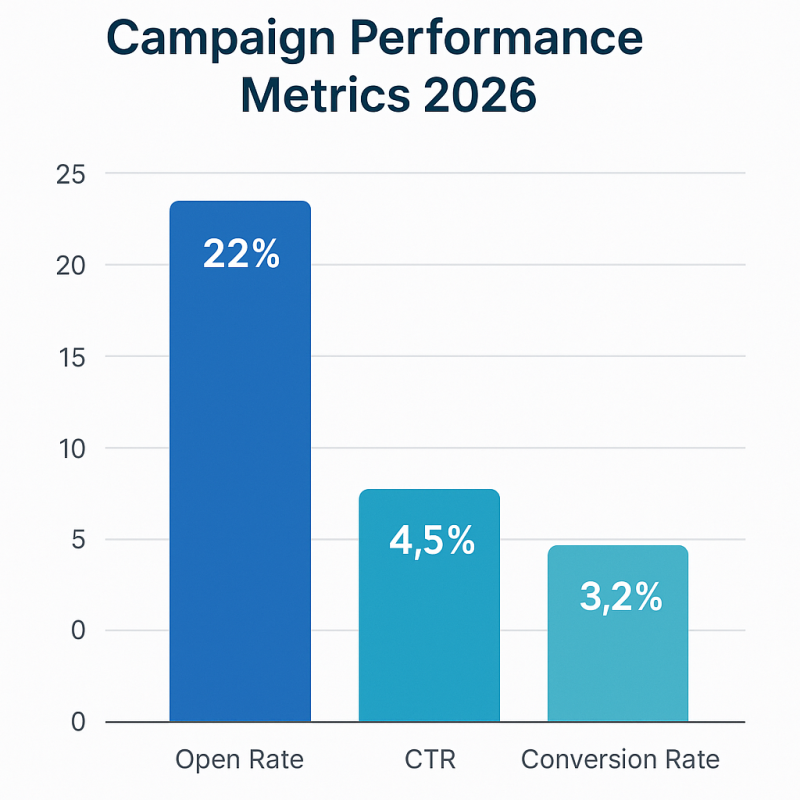
Monitoring key performance metrics is crucial for evaluating the success of your email campaigns and identifying areas for improvement. Metrics such as open rate, click-through rate (CTR), and conversion rate provide quantifiable insights into how recipients interact with your emails. For instance, a low open rate might indicate issues with subject lines or timing, while a low CTR could suggest that content or calls-to-action need refinement. Catalogz’s analytics tools facilitate real-time tracking of these metrics, enabling marketers to swiftly identify trends and adjust their tactics accordingly. A recent analysis of campaign performance in 2026 reveals the following key metrics: an average open rate of 22%, a CTR of 4.5%, and a conversion rate of 3.2%, highlighting areas for targeted optimization.
Refining Strategies Based on Data
Data analysis empowers marketers to continually refine their email marketing strategies for better results. By examining performance metrics and customer engagement patterns, you can identify what works and what doesn’t. For example, if certain segments demonstrate higher open and conversion rates, you can allocate more resources toward personalized messaging for those groups. Conversely, underperforming campaigns may require A/B testing of subject lines, content formats, or send times. Catalogz’s AI-driven platform offers predictive analytics and segmentation capabilities that facilitate proactive strategy adjustments, ensuring your campaigns remain relevant and effective. Regularly reviewing data insights and implementing iterative improvements lead to sustained growth, higher ROI, and stronger customer relationships.
Data Insights: Campaign Performance Metrics 2026
| Metric | Value |
|---|---|
| Open Rate | 22% |
| CTR (Click-Through Rate) | 4.5% |
| Conversion Rate | 3.2% |
This bar chart illustrates the key campaign performance metrics for 2026, highlighting an open rate of 22%, a CTR of 4.5%, and a conversion rate of 3.2%. These insights provide a benchmark for evaluating ongoing campaigns and identifying opportunities for improvement. By focusing on these core metrics, marketers can fine-tune their automation workflows, content personalization, and overall strategy to achieve higher engagement and sales outcomes.
Maximizing Results with Best Practices and Tools
Implementing proven best practices and utilizing advanced tools are essential steps toward maximizing the effectiveness of your email marketing campaigns. This section explores key strategies such as segmentation, A/B testing, compliance, and the role of innovative technologies like Catalogz in enhancing targeting precision and campaign performance. Adhering to these practices ensures higher engagement, improved deliverability, and sustained long-term success.
Segmentation and Personalization Strategies
Segmentation remains a cornerstone of successful email marketing, enabling businesses to tailor content to specific audience groups based on demographics, purchase history, browsing behavior, and engagement levels. Personalized messaging not only increases relevance but also fosters stronger customer relationships, leading to higher open and conversion rates. Modern platforms like Catalogz facilitate this process by organizing complex product and customer data, allowing marketers to create highly targeted campaigns with dynamic content blocks. As a result, segmentation combined with personalization transforms generic broadcasts into meaningful interactions that resonate with individual recipients, boosting overall campaign ROI.
A/B Testing for Optimization
A/B testing is a critical practice for refining email elements such as subject lines, visuals, calls-to-action, and send times. By systematically comparing variations, marketers can identify what resonates most with their audience and continuously improve campaign performance. Recent industry insights show that consistent testing can increase open rates by up to 20% and click-through rates by 15%. Tools integrated within platforms like Catalogz streamline this process, enabling automated testing and real-time analytics. Implementing a culture of ongoing experimentation ensures your email marketing remains agile, data-driven, and aligned with evolving customer preferences.
Compliance and Privacy Considerations
Ensuring compliance with data privacy laws such as GDPR, CAN-SPAM, and CCPA is vital for maintaining trust and safeguarding your brand’s reputation. Adherence to these regulations not only prevents costly penalties but also enhances deliverability by reducing spam complaints and bounce rates. Best practices include obtaining explicit consent before sending marketing emails, providing clear unsubscribe options, and respecting user privacy preferences. Recent updates in data privacy laws have prompted automation tools like Catalogz to incorporate compliance features, making it easier for marketers to stay aligned with legal standards while delivering personalized, relevant content that respects customer rights.
Leveraging AI and Automation Tools
Advanced AI-driven platforms such as Catalogz empower marketers to manage complex product data, automate personalized messaging, and optimize campaign timing with minimal manual effort. These tools analyze vast datasets to identify patterns, predict customer behaviors, and tailor content accordingly, significantly enhancing targeting accuracy and engagement. As one industry expert emphasizes, "Automation combined with AI insights transforms email marketing from a manual task into a strategic, scalable process that consistently delivers personalized experiences." Moreover, automation ensures timely delivery of relevant messages, nurtures customer relationships, and frees marketing teams to focus on strategic initiatives. Staying at the forefront of technological innovation and integrating intelligent automation are key to unlocking maximum value from your email marketing efforts.
Conclusion and Action Checklist
Achieving success in email marketing hinges on a strategic approach that combines careful planning, automation, and ongoing analysis. By implementing a disciplined process, online retailers and marketers can craft targeted, engaging, and compliant campaigns that resonate with their audience. Leveraging tools like Catalogz to streamline product data management further enhances personalization and campaign effectiveness. Remember, continuous refinement based on performance insights is essential for sustained growth and competitive advantage. Use this comprehensive checklist to ensure your email marketing efforts are well-structured, impactful, and aligned with best practices.
Rich Elements: Checklist
- Define Clear Objectives: Establish specific goals for each campaign, such as increasing sales, boosting engagement, or nurturing leads.
- Identify Your Target Audience: Segment your subscriber list based on demographics, purchase history, or behavior to tailor messaging effectively.
- Create Relevant Content: Develop personalized, compelling messages that add value and align with your audience’s interests and needs.
- Design Mobile-Optimized Emails: Ensure all emails are responsive, visually appealing, and easy to navigate on any device.
- Implement Automation Workflows: Set up triggered campaigns like cart abandonment, welcome series, or re-engagement sequences to save time and increase relevance.
- Test and Optimize: Conduct A/B testing on subject lines, visuals, and send times; analyze results to refine your approach continually.
- Ensure Compliance: Obtain explicit consent, include clear unsubscribe options, and adhere to GDPR, CAN-SPAM, and other relevant regulations.
- Leverage Data and Insights: Use analytics tools like Catalogz to monitor key metrics such as open rates, click-throughs, and conversions to inform future strategies.
- Manage Product Data Effectively: Utilize AI-driven platforms to organize and update product catalogs, enabling highly personalized product recommendations.
- Review and Refine Regularly: Continuously assess campaign performance, learn from insights, and adapt your tactics to improve results over time.
Frequently Asked Questions
Many marketers and online retail businesses have common questions about implementing effective email marketing strategies. This FAQ section provides clear, practical answers to help you understand the essentials, from starting your campaigns to legal considerations and best practices. Use this as a quick reference to clarify doubts and enhance your email marketing efforts with confidence.
How do I get started with email marketing?
Getting started with email marketing involves several key steps. First, define your target audience and segment your list based on demographics, preferences, or purchase behavior. Next, choose an email marketing platform—such as Mailchimp, Constant Contact, or an AI-driven solution like Catalogz—that suits your needs and budget. Develop compelling content and design templates optimized for mobile devices. Set up automation workflows for welcome emails, abandoned cart reminders, or re-engagement campaigns. Finally, test your emails through A/B testing, monitor performance metrics, and continuously refine your strategy to improve results. Consistency and relevance are critical to building trust and driving engagement over time.
What is the value of having a 1,000-email subscriber list?
A list of 1,000 engaged subscribers can be highly valuable, especially when these contacts are targeted and receptive. According to recent industry data, a well-maintained list of this size can generate thousands of dollars in revenue annually, depending on your product margins and campaign effectiveness. The key is quality over quantity—engaged subscribers are more likely to open, click, and convert. With personalized content, segmentation, and automation, a 1,000-subscriber list can deliver a strong ROI, making it a worthwhile asset for online retailers and marketers aiming for consistent growth.
What is the "Rule of 7" in email marketing?
The "Rule of 7" is a marketing principle suggesting that a potential customer needs to see or hear your message at least seven times before they take action, such as making a purchase. In email marketing, this underscores the importance of consistent, multi-touch campaigns that nurture leads over time. Regular communication, combined with valuable content and targeted offers, helps reinforce brand awareness and trust. By applying this rule, marketers can design sequences that gradually guide prospects through the sales funnel, increasing the likelihood of conversion and long-term loyalty.
Are there legal considerations I should be aware of?
Absolutely. Ensuring compliance with regulations like GDPR (General Data Protection Regulation), CAN-SPAM Act, and CCPA is essential for protecting customer privacy and maintaining your reputation. These laws require obtaining explicit consent before sending marketing emails, providing clear unsubscribe options, and respecting user privacy preferences. Recent updates emphasize transparency and data security, which can be facilitated through automation tools like Catalogz that incorporate compliance features. Non-compliance can lead to hefty fines and damage your brand’s credibility, so prioritize legal adherence in your email marketing practices.
What are the best practices for increasing email open and click-through rates?
To boost open and click-through rates, focus on crafting compelling subject lines that evoke curiosity or urgency, and personalize your content based on recipient data. Use segmentation to send targeted messages that align with subscriber interests. Optimize your email design for mobile devices, ensuring quick loading times and easy navigation. Incorporate clear, prominent calls-to-action (CTAs) and engaging visual content. Regularly test different elements through A/B testing to identify what resonates most. Additionally, maintaining a clean, engaged list by removing inactive subscribers helps improve deliverability and overall campaign performance. Consistent analysis and refinement are vital for sustained success in email marketing.